Going Stag
| UP-FRONT FEES | |
| Base Hunting & Conservation Licenses | $25.00 |
| Sheep, Moose, Goat, and Bison Application Fee | $50.00 |
| Bonus Points (Optional/Per Species) | $20.00 |
| Preference Point Only (For Combo Licenses) | $100.00 |
| Outfitter Preference Point Only (For Combo Licenses) | $100.00 |
| Big Game Combination License (Elk & Deer)* | $1,315.50 |
| Elk Combination License* | $1,115.50 |
| Deer Combination License* | $781.50 |
| Youth Big Game Combination License* | $671.50 |
| Youth Elk Combination License* | $571.50 |
| Youth Deer Combination License* | $404.50 |
| Antelope (Includes the $5 Application Fee) | $205.00 |
| Special Elk Permit Application | $9.00 |
| Special Deer Permit Application | $5.00 |
| Bow and Arrow License (Mandatory for All Archery Hunts) | $10.00 |
| *All Combination License prices include required Base Hunting License, Conservation License, Aquatic Invasive Species Prevention Pass, and Application Fees | |
| POST DRAW FEES (IF SUCCESSFUL) | |
| Bighorn Sheep License | $1,250.00 |
| Moose License | $1,250.00 |
| Mountain Goat License | $1,250.00 |
| Bison License | $1,250.00 |
| Wolf License | $50.00 |
| Wolf License (If You Draw a Combination License) | $25.00 |
| UP-FRONT FEES | |
| Base Hunting & Conservation Licenses | $18.00 |
| Sheep, Moose, Goat, and Bison Application Fee | $10.00 |
| Bonus Points (Sheep, Moose, Mountain Goat) | $75.00 |
| Bonus Points (Elk, Deer, Antelope) | $25.00 |
| General Deer License | $16.00 |
| Deer B License | $10.00 |
| Youth General Deer License | $8.00 |
| General Elk License | $20.00 |
| Elk B License | $20.00 |
| Youth General Elk License | $10.00 |
| Antelope (Includes the $5 Application Fee) | $19.00 |
| Bow and Arrow License (Mandatory for All Archery Hunts) | $10.00 |
| POST DRAW FEES (IF SUCCESSFUL) | |
| Bighorn Sheep License | $125.00 |
| Moose License | $125.00 |
| Mountain Goat License | $125.00 |
| Bison License | $125.00 |
| Wolf License | $10.00 |
| MONTANA ELK SEASON DATES | |
| Archery | Sep 6 – Oct 19, 2025 |
| Rifle | Oct 25 – Nov 30, 2025 |
| Backcountry (HDs 150, 280, 316) | Sep 15 – Nov 30, 2025 |
| MONTANA DEER SEASON DATES | |
| Archery | Sep 6 – Oct 19, 2025 |
| Rifle | Oct 25 – Nov 30, 2025 |
| Backcountry (HDs 150, 280, 316) | Sep 15 – Nov 30, 2025 (Archery Sep 6 – Sep 14) |
| Youth Hunt | Oct 16 – 17, 2025 |
| MONTANA ANTELOPE SEASON DATES | |
| Archery | Sep 6 – Oct 10, 2025 |
| Archery (900) | Aug 15 - Nov 9, 2025 |
| Rifle | Oct 11 – Nov 9, 2025 |
| MONTANA BISON SEASON DATES | |
| Any Weapon | Sep, 2025 - Feb 2026 (varies by unit) |
| MONTANA MOOSE SEASON DATES | |
| Controlled Hunts | District-specific; generally Sep 15 – Nov 29 |
| MONTANA BIGHORN SHEEP SEASON DATES | |
| Archery | Sep 6 - Sep 14 (varies by unit) |
| Any Weapon | Sep 15 - Nov 30 (varies by unit) |
| MONTANA MOUNTAIN GOAT SEASON DATES | |
| Archery | Sep 6 - Sep 14 (varies by unit) |
| Any Weapon | Sep 1 - Nov 30 (varies by unit) |
| MONTANA WOLF SEASON DATES | |
| Archery | Sep 6 – Sep 14, 2025 |
| General | Sep 15, 2025 – Mar 15, 2026 |
| Trapping | Date is dependent on location |
| MONTANA BLACK BEAR SEASON DATES | |
| Spring | Apr 15 – June 15, 2025 |
| Fall | Sep 15 – Nov 30, 2025 |
Disclaimer: Dates vary by hunting district (HD) and may change through emergency regulations. Always confirm with Montana FWP before planning your hunt: : https://fwp.mt.gov/hunt
| YEAR | ELK & DEER | MOOSE, MTN GOAT, SHEEP & BISON | ANTELOPE 900-20 & B LICENSES | RIFLE ANTELOPE / SUPER TAGS |
|---|---|---|---|---|
| 2025 | April 15, 3:05 p.m. | May 7, 2:20 p.m. | June 13 | |
| 2024 | April 15, 3:38 p.m. | May 8, 3:00 p.m. | June 17 | Early August |
| 2023 | April 17, 3:08 p.m. | May 12, 3:50 p.m. | June 14 | Aug 8 |
| 2022 | April 14, 1:14 p.m. | May 10, 10:00 a.m. | June 13 | |
| 2021 | April 14, 11:00 a.m. | May 11, 9:44 a.m. | June 18 | |
| 2020 | April 14, 4:00 p.m. | May 11, 9:45 a.m. | June 15 | August 6 |
| ANNUAL | Mid-July (Super Tags) |
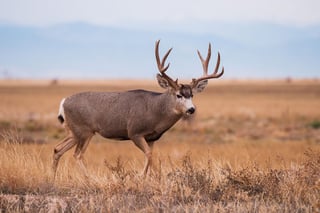
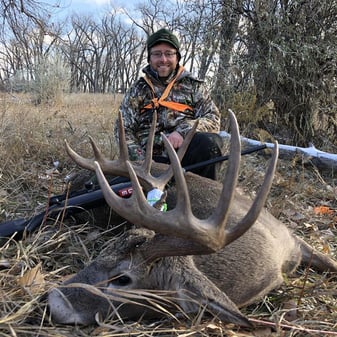
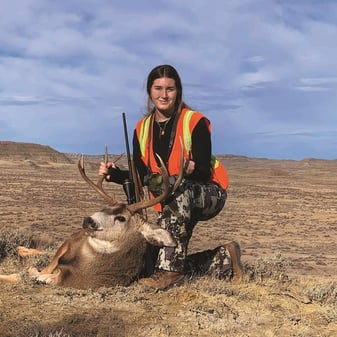
You can really break Montana deer hunting into two different categories: deer hunting on private land and deer hunting on public land. If you have access to private land or are booking with an outfitter that’s been leased private land, you are going to be in for a good hunt—assuming the landowner or outfitter is managing the property. If you’re planning to hunt public land in the eastern part of the state, you should be aware that overhunting has led to low deer populations and very low age class. If you’re a public land hunter looking to hunt the more mountainous regions on the western side of the state, you will have a better chance of finding a mature buck.
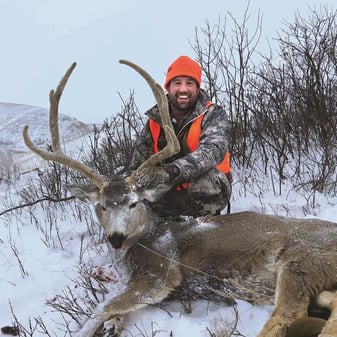
The majority of the deer units in Montana are managed for hunter opportunity rather than trophy hunting. Montana’s general deer tags provide a great opportunity for hunters to harvest a nice mule deer or whitetail buck. Archery season is September 5 through October 18, rifle season is October 24 through November 29, and muzzleloader season is December 12 through 20. The rifle season dates allow hunters to hunt the entire rut. The downside of these season windows is that most of the mature bucks on public land are harvested each year, making it difficult to find many older-age-class bucks on the landscape. Montana can manage this because deer find sanctuary on private land, ensuring they get some age on them. That said, finding a 150” mule deer buck on public land is harder today than it’s been at any time in the last decade.
The eastern side of the state is by far the most popular general mule deer hunting spot, but populations are way down. That side of the state has a lot of private land, but there is plenty of Block Management and public land that anyone can hunt. For hunters wanting to see more deer, the central and eastern parts of the state are where they should be looking. For those who enjoy mountain hunting and are okay with not seeing a lot of mule deer, they should look towards regions 1, 2, and 3. More mature bucks have been taken in these timbered mountain areas in recent years. Ultimately, a big buck can come from anywhere in the state as long as he’s had the chance to get some age on him.
If you are wanting a deer hunt with less hunting pressure, you should look at the muzzleloader hunt. This hunt is post-rut, and bucks will be feeding hard to put some body weight back on for the winter. Be prepared for cold weather as the season runs through mid-December, and make sure your muzzleloader meets the Montana muzzleloader heritage season rules.
| UNIT(S) | COMMENTS |
|---|---|
| 130-50 | Swan — Mission Mtns Wilderness only. Early rifle high-country deer starting Sept 15. Very steep, rugged, grizzly country. Backpack recommended; day-hunt possible. Bucks 140–170"+. 1 non-res tag in 2024. |
| 202-50 | South Superior — Borders Idaho. Low density, stable pop. Mostly FS land with good road/trail access and old burns. During rut bucks drop to lower open country. Bucks 140–160"+; one giant each year. High success for average deer. 9 non-res tags in 2024. |
| 210-50 | John Long Range — Mixed private ranches (NE & S mostly private). onXmaps essential. Some BMA access. FS land has good trail/road access. Bucks 140–160"+ with occasional giants. No non-res tags in 2024. |
| 250-50 | West Fork Bitterroot — Public, rugged FS land with roadless pockets. Predator-heavy, reducing giant buck production. Archery on ID border holds some big bucks. Bucks 140–160"+; a few giants annually. 1 non-res tag in 2024. |
| 261-50 | East Bitterroot — Rolling sage hills to steep timber. Pop stable; archery high-country good. Bucks 150–170"+, 180"+ potential (none taken in 2024). Rut sees deer move to unit 262. 1 non-res landowner tag; none in regular draw. |
| 262-51 | Bitterroot Farmlands — Almost all private orchards/ranches 5–100 ac. Archery prime for orchard bucks; heavy pressure opening day. Very tough without access. Bucks 140–170"+. No non-res tags in 2024. |
| 270-50 | East Fork Bitterroot — Best hunt in the state. Public & private mix; lower country easy, high country thick. Archery avoids elk-rifle pressure. Bucks 160–180"+; two over 190" in 2024. 2 non-res landowner tags; 2 reg. draw tags in 2024. |
| 270-51 | East Fork Bitterroot (Mgmt Buck) — Same as above, but only bucks with one horn ≤ 3 points allowed. 1 non-res landowner tag; none in regular draw 2024. |
| 282-51 | Blackfoot–Clearwater GR — Whitetail only. Public lands with road access; deer pressured onto GR by surrounding hunts. Grizzly country. Bucks 120–140"+. No non-res tags in 2024. |
| 291-50 | East Garnet Range — Improving quality. Private land with BMP areas; some non-BMP access early. BLM & state lands open; lower glassable country. Youth-only season issues 30 tags (291-51). Bucks 140–160"+. 1 non-res reg. tag; none youth in 2024. |
| 300-50 | Lima Peaks & Nicholia — Rugged grass/sage mountains. Mainly public with lower private. Good access. Rifles pressure from elk. Archery backpack hunt fun. Bucks 140–160"+; occasional giant. 3 non-res tags in 2024. |
| 401-50 | Sweet Grass Hills — NC MT border. Rut deer until Nov 16. Private with BMA; little public. Rolling grasslands & timbered hills. Road access good; some walk-in only. Bucks 140–160"+. 8 non-res tags in 2024. |
| 410-50 | Missouri River Breaks — General until 2024. Expect low densities & few mature bucks. Public & private (BMA) mix. Rolling sage hills, ridges & breaks with road/boat access. Backpacking off roads fun. Bucks 130–160"+. 5 non-res tags in 2024. |
| 417-50 | Armells Creek — General prior to 2024. Mostly private; some BMA. Public NE corner available. onXmaps required. Backpack/horse helpful for BLM pockets. Occluded by cow-elk pressure south of Knox Ridge. Bucks 130–160"+. 10 non-res tags in 2024. |
| 441-50 | North Fork Birch Creek & Teton — Primarily private; very difficult access. General rifle until Nov 9, then NP only. Few BMA areas. Bucks 140–160"+ with great potential if you have access. 1 non-res tag in 2024. |
| 455-60 | Beartooth WMA — Mule deer 140–160"+ or whitetail 120–140"+. Pop down, mature bucks few. Gates of the Mountains Wilderness. Public only; non-motorized. Day-hunt or backpack/horse for remoteness. Rugged grass/sage mountains. No non-res tags in 2024. |
| 652-50 | McCone & Garfield — Only limited-entry deer in Missouri Breaks. Pop down, fewer mature bucks. Good success. Public land with road access; some private. Rolling sage flats & Fort Peck Reservoir break country. onXmaps advisable. Bucks 130–160"+. 12 non-res tags in 2024. |
| UNIT(S) | COMMENTS |
|---|---|
| 130, 285 | Swan Valley/Seeley Lake — Rolling foothills to high peaks in dense conifer. Mix of public roads and remote roadless areas. Outstanding public-land whitetail country; some mule deer up high. Grizzly country; November rifle pressure. Site of state record whitetail. |
| 150 | Bob Marshall Wilderness — Early rifle from Sept 15. All public, remote, rugged conifer & burns. Mixed mule & whitetail; low deer density scattered. Minimal pressure, mainly elk hunters. Horses/backpack required. Grizzly country. |
| 313, 314, 317 | Paradise Valley — Public land interspersed with private in valley floor. Rugged, remote; fair road access to trailheads. Whitetails lowland; mule deer up high. Backpack/horse improves odds. Grizzly country. Unit 313 rifle closes Nov 16; no late muzzleloader. |
| 401 | Sweet Grass Hills — Northcentral MT. General rifle until Nov 16. Mostly private with BMP; limited public. Rolling grasslands & willow breaks; steep timbered hills. Good mule & whitetail. Outfitters produce top bucks on private. |
| 600, 640, 670 | High Line — Northcentral/eastern MT. BLM & state land with BMP; some large private. Rolling sage flats, grass hills, clay breaks. Mule deer dominate; a few whitetails. Roads good when dry; heavy rifle-season pressure. |
| 620, 621, 622, 630, 690 | Missouri River Breaks North — NE MT. Primarily BLM/state with BMP; unit 690 better numbers but more private. Mixed mule & whitetail by river/ag fields. Terrain from flats to rugged breaks. Boat/road access; heavy pressure. |
| 426, 700 | Missouri Breaks Prairie & Winifred — NE MT. Public BLM/state with more private than north side. Mule deer focus; whitetails by river/ag fields. Sage flats to rugged breaks. Access by boat/foot; BMP available. Unit 426 mule rifle closes Nov 16; no late muzzleloader. |
| 701, 702 | Sagebrush Prairie & Yellowstone Pine Hills — Eastern MT. Almost all private with BMP pockets. Rolling sage/grass hills. Mule deer mainly; some whitetails near Yellowstone River. onXmaps essential; easy terrain; low pressure. |
| 703 | Yellowstone Breaks Grasslands — Eastern MT. Mostly private with BMP; good road access. Mix of river bottoms, ag fields, breaks & sage hills. Good whitetail & mule deer. Outfitters manage private quality bucks. |
| 704, 705 | Powder Pine Hills & Prairie/Pine-Juniper Breaks — Southeast MT. FS, state & BLM blocks mixed with private. Rolling hills to rugged topography. Mule deer focus; some whitetail. High rifle-season pressure; Custer NF holds more deer. |
Unlock with a PRO or PRO+ MEMBERSHIP


The Montana application deadline for deer is April 1, 2026.
Our magazine, which is available in print and online, has everything in one location - application info, draw details and odds, fees, hunter requirements, point structure, age restrictions, youth information, weapon restrictions, other tag opportunites, hunt planning, and much more. If you would like access to all of our research, join today!
| MONTANA DEER HUNTS | 2025 DATES |
|---|---|
| Archery | Sep 6 – Oct 19, 2025 |
| Rifle | Oct 25 – Nov 30, 2025 |
| Backcountry (HDs 150, 280, 316) | Sep 15 – Nov 30, 2025 (Archery Sep 6 – Sep 14) |
| Youth Hunt | Oct 16 – 17, 2025 |
Disclaimer: Dates may vary by hunting district and change via emergency rule. Always verify with Montana FWP: fwp.mt.gov/hunt/regulations.
There are a few better limited-entry units that offer hunters a good shot at taking an above average buck. Bitterroot Valley units 261, 262, and 270 have long been known as the best units in the state for taking a trophy buck, but like everywhere else in the West, these units have been struggling to produce the big bucks they are known for. In 2025, Unit 270 did produce three bucks that scored over 195”, with the biggest scoring 223”. Units 261 and 270 have plenty of public land and are still quality units.
In Montana, fifteen percent of all permits for elk and deer can go to landowners. The landowner draw takes place before the regular draw. Any special permit that a non-resident landowner draws will count against the ten percent non-resident quota for that unit. In 2025, all of the non-resident deer permits in 261-50 were distributed through the regular draw and one of the three 270-50 non-resident tags was drawn by a non-resident landowner. Over the last eight seasons, all non-resident permits in unit 261, and eighteen of the twenty-six non-resident tags in unit 270 were drawn by non-resident landowners.
Unit 262 is still producing a couple good bucks each year, but if you don’t want to hunt on private land around houses, don’t apply for this unit. This is not going to be a fun hunt for a self-guided non-resident, as access is typically granted to local hunters who spend the spring and summer months knocking on doors to secure areas to hunt. Access is also getting harder to come by; many landowners in the area have grown tired of being asked for permission to hunt their land, and outfitters are also struggling to find access in this unit. Finding a big buck in unit 262 is more difficult now than in the past, though there was one 180” buck killed during the archery hunt in 2025.
Units in Eastern Montana have taken the biggest population hit and are still well below the ten-year average. Hunters have had to work a lot harder to fill their tags the last couple of years, and many have had to resort to shooting younger bucks. The herds in Western Montana are small but stable. The central and eastern parts of the state have stable or, in some cases, slightly increasing populations of mule deer. In 2025, the statewide mule deer population estimate came in at 273,415 deer—a ten percent increase over the 2024 population estimate. Montana FWP broke that number down into estimates for each region: 8,808 mule deer in region 1; 15,050 mule deer in region 2; 47,184 mule deer in region 3; 54,178 mule deer in region 4; 23,307 mule deer in region 5; 54,973 mule deer in region 6; and 69,915 mule deer in region 7. Hopefully, Montana will keep mule deer doe tags low and continue to give these numbers a chance to rebound. If you are a mule deer doe hunter, remember that the majority of mule deer doe permits will only be valid on private land. Check the regulations for more information on doe tags.
If you are planning on hunting general mule deer, we have included a 2026 General Districts map for mule deer on page 109. This map will give hunters a good idea of the units where they can hunt mule deer with a general tag. This map is based on the 2026 regulations.
Create a FREE ACCOUNT to unlock content
$199 BILLED ANNUALLY
Everything in Pro, plus unlimited one-on-one hunt consultations, and everything you need to prep like a pro and hunt like a fool.
$48 BILLED ANNUALLY
Access community intel, research tools, and our online magazine. Draw more tags and go on more hunts with better information.
Our members experience improved hunting opportunities as a direct result of the Huntin' Fool magazine. We are the only publication that breaks more than 20 states' hunting regulations and draw systems into bite-sized chunks for our members.
Advisor Articles from Our Magazine on Montana Application and Hunting Strategy
Montana’s 2025 estimates put its whitetail population at roughly 225,346 individuals, which is up from the previous year’s estimate by thirteen percent. The 2025 population estimate is above the ten-year average of 209,945 deer. The breakdown per region is as follows: 77,324 whitetail deer in region 1; 42,403 whitetail deer in region 2; 24,823 whitetail deer in region 3; 36,493 whitetail deer in region 4; 15,420 whitetail deer in region 5; 12,252 whitetail deer in region 6; and 16,631 whitetail deer in region 7. The more popular areas for whitetail are along the river systems and large agricultural areas throughout the eastern part of the state. Private land is the key to hunting whitetail, unless you are hunting the mountainous regions in Western Montana. The majority of whitetails are found on the west side, but the highest scoring bucks are typically taken in the eastern half of the state. However, there are some really good mountain bucks being harvested on the western side of the state. There were some isolated cases of epizootic hemorrhagic disease (EHD) in eastern Montana last year that affected the whitetail populations, but the events were very spotty and all regions showed overall population growth.
Montana is still a good state for hunting rutting deer; you just need to keep your expectations in check and realize that populations are nowhere where they used to be on public land. If you have any questions about general deer hunting opportunities, or you’re looking for an outfitted private-land hunt in Montana, give us a call.
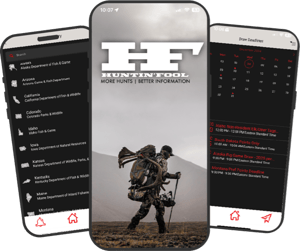
Huntin’ Fool offers a wide variety of services and resources within the hunting space, and the Huntin’ Fool App offers access to them all. Utilizing this app, you will be able to apply for hunts, plan hunts, buy hunts, and win hunts. This app is simple to use and puts the tools you need to go on great hunts right at your fingertips.
At Huntin' Fool, we are always looking for ways to improve our service and help out members to the very best of our abilities. We believe communication is what makes our Huntin' Fool community great!