Making Memories in New Mexico
| UP-FRONT FEES | |
| Game Hunting License (Non-Refundable) | $65.00 |
| Junior Game Hunting License (Non-Refundable) | $15.00 |
| Habitat Management & Access Validation (Required) | $4.00 |
| Habitat Stamp (Required by all who hunt BLM or USFS land) | $10.00 |
| Bighorn Sheep | $3,173.00 |
| Elk Q/HD License | $773.00 |
| Elk S License | $548.00 |
| Deer Q, Q/HD License | $368.00 |
| Deer S License | $283.00 |
| Antelope | $283.00 |
| Oryx | $1,623.00 |
| Barbary Sheep | $373.00 |
| Ibex | $1,623.00 |
| $13 nonrefundable application fee included. | |
| UP-FRONT FEES | |
| Game Hunting License (Non-Refundable) | $15.00 |
| Junior Game Hunting License (Non-Refundable) | $10.00 |
| Habitat Management & Access Validation (Required) | $4.00 |
| Habitat Stamp (Required by all who hunt BLM or USFS land) | $10.00 |
| Bighorn Sheep | $160.00 |
| Elk Q/HD License | $90.00 |
| Elk S License | $90.00 |
| Deer S, Q, Q/HD License | $41.00 |
| Antelope | $60.00 |
| Oryx | $160.00 |
| Barbary Sheep | $110.00 |
| Ibex | $1110.00 |
| $7 nonrefundable application fee included. | |
| NEW MEXICO ELK SEASON DATES | |
| Archery (1st season) | Sep 1 – Sep 14, 2025 |
| Archery (2nd season) | Sep 15-Sep 24 2025 |
| Rifle/Muzzleloader (Early season) | Early Oct (unit/weapon dependent) |
| Rifle/Muzzleloader (1st season) | Oct 11 – Oct 15, 2025 |
| Rifle/Muzzleloader (2nd season) | Oct 18 - Oct 22, 2025 |
| Rifle/Muzzleloader (3rd season) | Oct 25 - Oct 29, 2025 |
| Rifle/Muzzleloader (Late season) | Late Nov (unit/weapon dependent) |
| NEW MEXICO MULE DEER SEASON DATES | |
| Archery (1st season) | Sep 1 – Sep 24, 2025 (unit dependent) |
| Archery (2nd season) | Jan 1 – Jan 15, 2026 (unit dependent) |
| Premium Statewide Any-Weapon Hunt | Sep 1, 2025 – Jan 31, 2026 |
| Muzzleloader (1st season) | Sep 27 - Oct 3, 2025 (unit dependent) |
| Muzzleloader (2nd season) | Nov 1 - Nov 5, 2025 (unit dependent) |
| Rifle (1st season) | Oct 25 - Oct 29, 2025 (unit dependent) |
| Rifle (2nd season) | Nov 1 – Nov 5, 2025 (unit dependent) |
| Rifle (3rd season) | Nov 8 - Nov 12, 2025 (unit dependent) |
| Rifle (4th season) | Nov 15 - Nov 19, 2025 (unit dependent) |
| NEW MEXICO COUES DEER SEASON DATES | |
| Archery (1st season) | Sep 1 – Sep 24, 2025 (unit dependent) |
| Archery (2nd season) | Jan 16 – Jan 31, 2026 (unit dependent) |
| Muzzleloader | Nov 1 - Nov 5, 2025 |
| Rifle (1st season) | Nov 22 - Nov 26, 2025 |
| Rifle (2nd season) | Dec 6- Dec 14, 2025 |
| NEW MEXICO ANTELOPE SEASON DATES | |
| Archery | Aug 9 – Aug 17, 2025 |
| Muzzleloader | Aug, Sep (unit dependent) |
| Rifle (1st season) | Aug 23 – Aug 25, 2025 |
| Rifle (2nd season) | Sep 27 - Sep 29, 2025 |
| Rifle (3rd season) | Oct 4 - Oct 6, 2025 (unit dependent) |
| NEW MEXICO BEAR SEASON DATES | |
| Fall Bear | Aug 16 – Nov 30, 2025 |
| Spring Bear | Apr – Jun 2025 (unit-dependent) |
| NEW MEXICO MOUNTAIN LION SEASON DATES | |
| General Statewide | Apr 1, 2025 – Mar 31, 2026 |
| NEW MEXICO SHEEP SEASON DATES | |
| Desert Bighorn | Aug – Dec 2025 (unit-dependent) |
| Rocky Mountain Bighorn | Aug 2025 – Jan 2026 (unit-dependent) |
| NEW MEXICO ORYX SEASON DATES | |
| Rifle (on & off range) | Year-round (unit & season dependent) |
| NEW MEXICO IBEX SEASON DATES | |
| Archery (1st season) | Oct 1 - Oct 15, 2025 |
| Archery (2nd season) | Jan 15 - Jan 29, 2026 |
| Muzzleloader | Feb 21 - Feb 27, 2026 |
| Rifle | Nov 15 - Nov 29, 2025 |
| NEW MEXICO BARBARY SHEEP SEASON DATES | |
| Archery | Jan 1 - Jan 15, 2026 |
| Rifle | Oct 2025 - Feb 2026 (unit & season dependent) |
Disclaimer: Season dates in New Mexico vary by GMU, hunt code, and weapon type. Always verify with the latest New Mexico Department of Game and Fish (NMDGF) proclamations: wildlife.state.nm.us/hunting/.
| YEAR | RESULTS POSTED |
|---|---|
| 2025 | April 16, 6:00 a.m. (MDT) |
| 2024 | April 17, 6:00 a.m. (MDT) |
| 2023 | April 20, 5:59 a.m. (MDT) |
| 2022 | April 20, 6:00 a.m. (MDT) |
| 2021 | April 21, 6:00 a.m. (MDT) |
| 2020 | April 22, 6:15 a.m. (MDT) |
| 2019 | April 17, 6:30 a.m. (MDT) |
| 2018 | April 18, 10:00 a.m. (MDT) |
| 2017 | April 12 |
Create a FREE ACCOUNT to Unlock
New Mexico’s 2026-2027 Big Game Hunting Rules and Information booklet is out. You can download a copy online by going to https://wildlife.dgf.nm.gov/home/publications/, or you can call 888-248-6866 to order a copy.
The 2026 big game applications for all species in New Mexico must be submitted online before 5:00 p.m. MDT on March 18, 2026. The draw results will be posted on the NMDGF’s website by April 22.
The New Mexico Big Game Application Deadline is March 18, 2026 at 5:00 P.M. MDT.
New Mexico has both an online and phone application process. Hunters may apply online at https://onlinesales.wildlife.state.nm.us/. The NMDGF provides a telephone call center for help in completing and submitting applications. The call center will offer extended hours March 9–13 and March 16–17 from 8:00 a.m. to 6:00 p.m. MDT. They will also be available on the last day to apply, March 18, until 4:30 p.m. For help in completing applications, call 888-248-6866.
Residents and non-residents may apply together on the same application. Up to four people may apply for elk, deer, antelope, and Barbary sheep; up to two people may apply for oryx and ibex; and only one applicant may apply for bighorn sheep.
An applicant cannot edit their application once it has been paid for, though they may withdraw it. If an applicant withdraws an application, they may reapply. However, they will again be charged an application fee and the full tag fee. Withdrawn applications will be refunded immediately, except for the $13 application fee.


By Huntin' Fool
By Huntin' Fool
By Huntin' Fool
THE ADVISOR SERIES
Create a FREE ACCOUNT to Unlock
New Mexico guarantees a minimum of 84% of its special draw hunt tags for all species to its residents. They will attempt to issue 6% of draw tags to non-residents who are not applying with an outfitter and 10% of tags to both residents and non-residents who are contracted with an outfitter. Applicants contracted to an outfitter must include their outfitter’s ID number on their application. It is extremely unlikely for an outfitted applicant to draw a hunt code with six or fewer available licenses or for a non-resident to draw a hunt code with twelve or fewer available licenses. Applicants are given three regular, limited-entry application choices when applying for any big game species. When an applicant is drawn, all three choices are considered before the next applicant is drawn. An additional fourth or fifth choice may be offered, but these application choices do not pertain to regular hunt choices; rather, they apply to leftover tags or population management tags.
Successful applicants will be mailed one convenient document that includes their big game hunting license, any stamps purchased, carcass tag, and (if applicable) an antler or horn tag.
Hunters may choose the E-Tag option when purchasing or applying for any big game hunt. You will not receive a carcass tag if you choose this option. Hunters who choose the E-Tag will be required to download the E-Tagging app on their phone, upload their big game license, and carry their phone in the field. A printed license and carcass tag is not required.
New Mexico law requires that any applicant who applies in the outfitter draw must have a signed guide-client contract. If the client draws a license by applying with a New Mexico outfitter’s number, they must be accompanied in the field by that outfitter or their registered guide for at least two days. After this requirement has been met, the client can then hunt on their own without the assistance of a guide.
Applicants are only allowed one tag in their lifetime for each of the following species: rifle ibex, “premier” oryx, Rocky Mountain bighorn sheep ram, desert bighorn sheep, and elk on the Valle Vidal. There are no waiting periods for any other species or hunts.
Create a FREE ACCOUNT to Unlock
$199 BILLED ANNUALLY
Everything in Pro, plus unlimited one-on-one hunt consultations, and everything you need to prep like a pro and hunt like a fool.
$48 BILLED ANNUALLY
Access community intel, research tools, and our online magazine. Draw more tags and go on more hunts with better information.
Our members experience improved hunting opportunities as a direct result of the Huntin' Fool magazine. We are the only publication that breaks more than 20 states' hunting regulations and draw systems into bite-sized chunks for our members.
All applicants are required to purchase a game hunting license and a Habitat Management and Access Validation (HMAV) stamp prior to applying. Upon submission of your application, you will be charged the entire tag, license, and application fees. Make sure the appropriate funds are available on your credit card. If unsuccessful in the draw, you will receive a refund for the full amount of the tag fee on your credit card, minus the non-refundable application fee of $13 per species. The $90 game hunting license is also non-refundable.
New Mexico’s deer and elk licenses vary in fee price depending on the specific hunt code, and they will be listed in the regulations with the license type. These types are Standard (S), Quality (Q), and High Demand (HD). Keep in mind that the fees vary greatly based on the classification. Visa, MasterCard, Discover, and American Express credit and debit cards are acceptable forms of payment. If successful in the draw, it is required that the hunter purchase and possess a $10 Habitat Stamp in order to use U.S. Forest Service and Bureau of Land Management (BLM) lands in New Mexico. This may be purchased online at https://wildlife.dgf.nm.gov, at NMDGF offices, from license vendors, or toll-free at 888-248-6866.
Advisor Articles from Our Magazine on New Mexico Application and Hunting Strategy
Hunters younger than eighteen must have their hunter education certificate to apply or purchase a license and either have it in their possession while out hunting or be registered in the Mentored-Youth Hunting Program. NMDGF will only accept proof of out-of-state hunter’s education for youth nine years of age or older. There is no minimum age to take NMDGF’s in-person hunter’s education course if accompanied by a parent or legal guardian. Hunter’s education is required for all hunters who draw licenses for the White Sands Missile Range (WSMR) or Fort Bliss hunts, regardless of age. There is no state law requiring a hunter to wear blaze orange; however, all hunters on military properties must wear at least 144 square inches of blaze orange. Additionally, elk hunters on the Valles Caldera National Preserve must wear 244 square inches of blaze orange during all firearm seasons. When hunting Fort Bliss, including the McGregor Range, a blaze orange vest is required.
There is no minimum age to apply or hunt in New Mexico, but hunter education is required and has age limitations.
New Mexico does not have a bonus or preference point system.
If you want to see your exact draw odds based off the number of weighted points you have, you can use the research tool at research.huntinfool.com. Select the hunt you wish to apply for, enter the number of weighted points you have, and this will give your exact draw odds from the previous year. The elk, deer, and antelope odds are listed as the minimum number of preference points an applicant drew with in the 2025 draw.
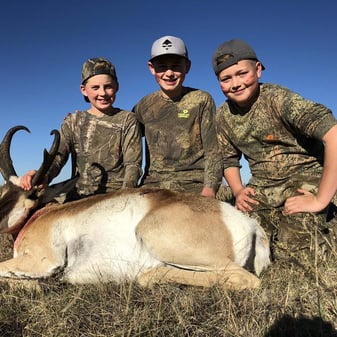
New Mexico reserves some of the very best hunts and dates exclusively for youth hunters. See our tables for more information on the exclusive youth opportunities for Rocky Mountain bighorn sheep, elk, deer, oryx, and ibex. Youth hunting licenses are only $15, but all species fees are full price. To qualify for youth-only hunts, applicants must be seventeen years of age or younger on the opening day of the hunt.
When you look at the numbers, New Mexico quickly rises to the top as one of the most advantageous states for youth hunters in the West. Each year, the state reserves thousands of licenses specifically for youth applicants, and many of the best season dates and highest-quality units are allocated to these junior hunts. With the exception of Barbary sheep, every major big-game species offers youth-only opportunities—often with better draw odds and less competition than standard rifle seasons.
The cost of the junior hunting license is only $15, though species permit fees remain identical for both adult and youth applicants. Youth hunts receive their own tag quotas and typically operate on stand-alone season dates, giving young hunters access to less-pressured animals. One regulatory shift worth noting is that youth applicants must now be at least nine years old by the application deadline in order to apply using an out-of-state hunter education number.
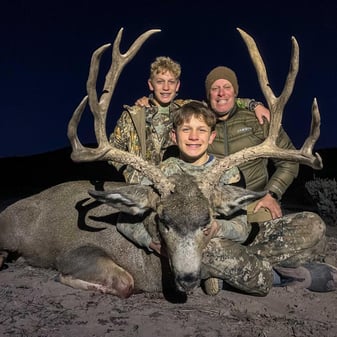
New Mexico’s youth seasons consistently produce good success rates on great animals. Many of the state’s largest bulls and bucks each year come from youth hunts, a reflection of both timing and reduced hunting pressure. While the premier youth elk and deer hunts remain difficult to draw, the payoff is substantial when a young hunter pulls a tag. However, 2026 applicants should be aware that, a few years ago, most youth elk seasons were shifted roughly a week later in the year, pushing many hunts outside peak rut activity and likely reducing vocalization and rut-driven behavior. These hunts are still excellent opportunities for the lucky youth hunters who draw the tags.
Like the rest of the draw, non-resident youth hunters are subject to the non-resident and outfitter draw quotas. A unit will need to have thirteen tags or more for a non-resident tag to be available or seven for an outfitted tag. This limits youth antelope hunters to all but a few options for youth-only antelope. New Mexico also offers youth-only hunts for oryx and ibex, but the numbers are low. The youth-only ibex pool is five tags, which means non-resident youth must apply in the regular draw to have any chance at all.
Overall, New Mexico is a great state to apply in for the youth hunters in your life. The reduced-price hunting license and premier season dates are a huge advantage. Although they still face steep draw odds, the reward of drawing a tag will be a great hunt that will create memories to last a lifetime.
Muzzleloaders may shoot sabots and belted bullets and use an in-line ignition. Scopes are prohibited on muzzleloaders; they may only be equipped with open or “iron” sights. Hunters are restricted to muzzleloaders of .45 caliber or greater. There are a few “restricted muzzleloader” seasons in which this gear is not legal.
Archery sights on bows may not project light, but lighted pins are acceptable. Arrows must have broadheads with cutting edges.
In New Mexico all public-land hunting permits, outside of the very limited OTC options, are allocated through the draw. If you plan to hunt here, you’ll either need to enter that draw or purchase a landowner tag. For hunters considering that route, landowner tags can be a straightforward alternative and a way to guarantee a hunt on any given year. The prices for these tags continue to rise, but they remain available for hunters who are willing to pay.
For hunters who are less interested in trophy potential and simply looking to get out and hunt, New Mexico does have easier-to-draw tags that can be worth adding to your application. Among these, antelope, deer, and elk provide some of the most attainable draw opportunities. One of the most effective ways to boost your odds is to apply through the guide draw, which operates from a separate pool of permits.
The state’s draw system evaluates each applicant’s first three hunt choices before moving on to the next applicant. A fourth choice exists, but it functions differently: it’s only considered after every applicant’s top three choices have been processed and only for hunts with leftover tags in that region. These fourth-choice hunts are typically low-quality, low-success options best suited for hunters who simply want a tag—not those seeking trophy potential.
If you fall into this category of wanting to get out and hunt more often, there are a few factors that can increase your odds for a given unit. Areas with private land challenges, lower animal densities, or lower historical success rates are some of the easiest to draw. These factors reduce demand and increase your chance of drawing. Tools like Huntin’ Fool’s draw-odds database can help pinpoint units with the most favorable odds.
Mule deer provide some of the most varied opportunities for non-resident hunters. Many units offer favorable draw odds; just know that you may be targeting younger bucks. Trophy potential exists, but that should not be the expectation on these hunts. Several mule deer units include significant private-land blocks, so digital mapping tools like onX are essential for navigating access boundaries.
For those interested in Coues deer, New Mexico offers excellent draw odds, particularly for archery and muzzleloader hunts. (Don’t forget that muzzleloaders must be used without scopes.) While success rates vary by season and weapon type, the units consistently produce quality bucks. Outfitters who spend significant time in these areas report strong harvest numbers and trophy-class bucks, making New Mexico an appealing option for hunters who want a chance at a big Coues buck.
Overall, New Mexico remains one of the most flexible and opportunity-rich states for hunters applying across multiple species. With no point system and a wide range of seasons, it’s a state where strategy and smart planning can make a meaningful difference. For hunters evaluating opportunity hunts or exploring landowner tag options, feel free to reach out. We would be happy to talk through some options with you.
All hunting licenses are non-transferable and non-refundable, including fourth choice deer or elk hunts. Only the New Mexico Game and Fish Department Director may grant the refund or transfer of a hunting or species license. The only reasons that would constitute a refund or transfer are death, severe injury, life- threatening illness, a natural disaster that prevents the hunt, deployment by the United States military, or transferring to a youth or a resident veteran or resident first responder who has been approved through a non-profit wish-granting organization. For more information, contact the Special Hunts office at 505-476-8093.
Anyone who is licensed to hunt or take game on public or private land must report the results of their hunting or trapping season, whether or not they hunted. Licensed hunters who fail to report their harvest will have their future applications rejected. Harvest reports may be submitted by phone or online at www.wildlife.state.nm.us.
Create a FREE ACCOUNT to Unlock
All leftover licenses will be sold online only. The date that leftover licenses will be available for purchase will be posted on the NMDGF website after the draw. New Mexico issues transferable landowner tags for sheep and elk. Sheep tags are extremely difficult to acquire as most are bought years in advance and, in most cases, are rotated from a public draw tag to a landowner tag on a bi-yearly basis. Elk landowner tags may be good “unit wide” or “ranch only”, depending on how the landowner registered their property. For antelope, hunters must obtain a private-land-only antelope license and tag. You must hunt on private land in the unit for which the tag was issued, have written permission from the landowner, and have a Habitat Management and Access Validation stamp. Deer landowner tags are also for private land only.
A hunter must have a private-land-only deer license and tag, as well as written permission from the landowner and a Habitat Management and Access Validation stamp. No one may have more than one valid license per species in a license year for deer, elk, or antelope. New Mexico offers a limited number of raffle tags for elk, deer, Rocky Mountain bighorn sheep, and desert bighorn sheep through various wildlife conservation organizations. Refer to our January 2026 issue for more information.
Customers may obtain a duplicate tag in person at any license vendor or NMDGF office. Duplicate licenses and tags will be charged a $6 fee (plus a $1 vendor fee). If a duplicate tag is obtained, the original tag number will be invalidated, and the license must be reprinted. New Mexico offers several hunts exclusively for Mobility-Impaired (MI) hunters. Many of these MI-exclusive hunts have great hunt dates. In order to qualify for this program, the applicant’s physician must sign and attest that mobility-impaired conditions apply. The MI license holder may use a crossbow during the archery-only season and may shoot from a stationary vehicle that is not on an established road or highway. Upon clearly wounding a legal game animal, the MI hunter may also be assisted by another person to track, retrieve, and kill the animal.
Create a FREE ACCOUNT to Unlock
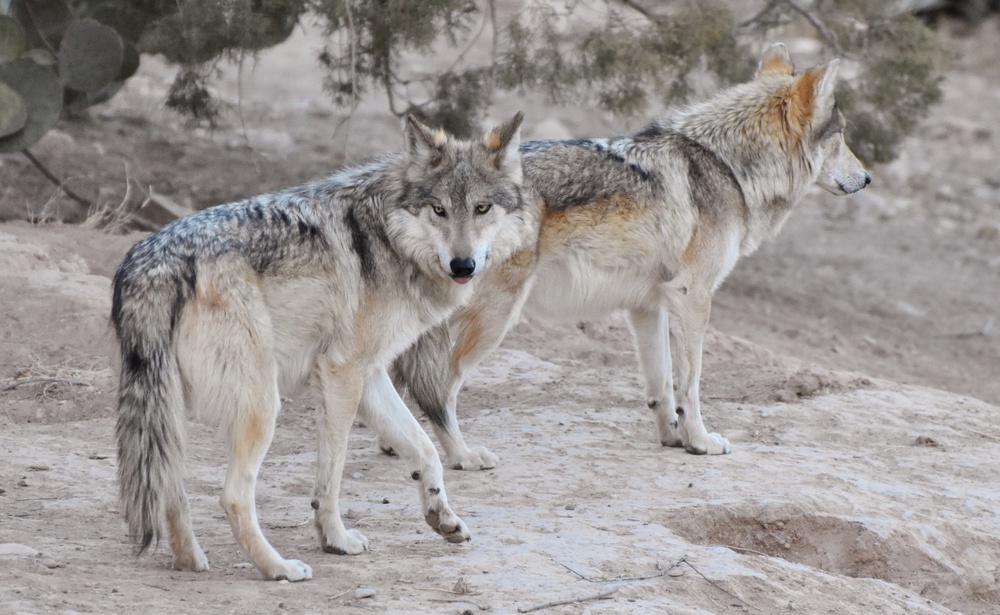
The wolf population in New Mexico has continued to steadily increase, more than doubling in size since 2019. The most recent survey estimates a minimum of 286 Mexican gray wolves currently inhabit the southern mountain ranges of New Mexico and Arizona. The population is dispersed amongst at least sixty packs. At first glance, these federally protected wolves appear to resemble large coyotes. Be careful and know what you’re shooting at; illegally shooting a wolf in New Mexico can come with a one-year jail sentence and a $50,000 fine.
New Mexico acknowledges the sacrifices our armed forces have made for this country. They offer active-duty military members the ability to apply for several special “Military Only” hunts. There is also a 50% discount for all licenses and stamps for resident active-duty military or honorably discharged veterans.
New Mexico has a Habitat Management and Access Validation program where hunters, trappers, and fishermen on any lands must purchase a $4 stamp once per year. Funds from the sale of these stamps will be used to lease private land for public use, provide public access to landlocked areas of public land, and provide for the improvement, maintenance, development, and operation of property for fish and wildlife habitat management. This validation stamp does not replace the habitat stamp.
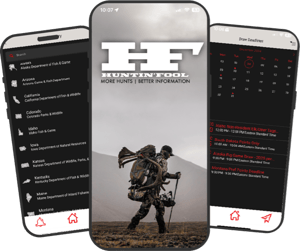
Huntin’ Fool offers a wide variety of services and resources within the hunting space, and the Huntin’ Fool App offers access to them all. Utilizing this app, you will be able to apply for hunts, plan hunts, buy hunts, and win hunts. This app is simple to use and puts the tools you need to go on great hunts right at your fingertips.
At Huntin' Fool, we are always looking for ways to improve our service and help out members to the very best of our abilities. We believe communication is what makes our Huntin' Fool community great!
The New Mexico hunting draw for big game species—including Barbary sheep, bighorn sheep, deer, elk, ibex, javelina, pronghorn, oryx, and private-land only deer in Units 2A, 2B, 2C, 4, and 5A—has an application deadline of March 18, 2026, by 5 p.m. Mountain Daylight Time, with draw results released on April 22, 2026. Bear and turkey draw permit applications are due by February 11, 2026, with results available on February 18. Pheasant and sandhill crane draw permits must be submitted by August 12, with results announced on August 19. To be eligible, hunters must purchase a 2026–27 Game-Hunting License and submit all 2025–26 harvest reports by the deadline—March 18 for deer, elk, pronghorn, and turkey, and April 7 for Barbary sheep, ibex, and oryx. Refunds for unsuccessful applicants are issued in April, though license and application fees are nonrefundable, and physical tags will be mailed in June unless the E-Tag option was selected.
Yes, in New Mexico, the big game animals you can legally hunt include deer, elk, pronghorn, bighorn sheep, Barbary sheep (also known as aoudad), oryx, ibex, javelina, black bear, and cougar (mountain lion). These species are all officially categorized as big game by the New Mexico Department of Game and Fish, with specific seasons, license requirements, and management strategies laid out for each.
The cost of a hunting license in New Mexico depends on residency, age, and the species pursued. All hunters must first purchase a base license: a Resident Game-Hunting License is $25, while non-residents pay $90. Residents may also opt for a Game-Hunting & Fishing License for $42. Junior licenses (under 18) are $10 for residents and $15 for non-residents, and seniors or disabled residents pay $15. Non-residents may purchase a 4-day temporary license for $40, though it is not valid for big game draw hunts. Additional species-specific licenses are required: for example, a standard draw deer license is $60 for residents and $398 for non-residents, while elk is $100 and $773 respectively. OTC licenses for species like turkey, bear, cougar, and javelina range from $35 to $58 for residents and $125 to $360 for non-residents. Non-resident bighorn sheep licenses cost $3,523. Most hunters must also purchase a Habitat Management and Access Validation (HMAV) for $4 and a Habitat Stamp for $10 (required on federal lands). Residents who are active military or receive SNAP benefits are eligible for 50% or 25% discounts, respectively, and 100% disabled veterans may qualify for a free lifetime license.
The cost for a non-resident to hunt in New Mexico includes several mandatory fees and species-specific license costs. First, all non-resident hunters must purchase a Game-Hunting License for $90, or a Junior License for $15 if under 18. A Habitat Management and Access Validation (HMAV) is required for hunters 18 and older ($4), and a Habitat Stamp is required to hunt on U.S. Forest Service or BLM lands ($10). If applying for big game in the draw, there is a $13 nonrefundable application fee per species. If successful, draw license costs include $773 for elk, $398 for deer, $423 for pronghorn, $1,623 for oryx or ibex, $373 for Barbary sheep, $178 for javelina, and $3,523 for bighorn sheep. Higher fees apply for quality or high-demand hunts (e.g., $998 for elk, $623 for deer). Over-the-counter (OTC) licenses are available for select species like bear or cougar ($360 each), javelina ($165), and turkey ($125). A nongame license for coyotes/rabbits is $65, and a shed hunting license is $200 for possession of more than two shed antlers. Additional access fees may apply for military or special-use lands, such as $185 for White Sands Missile Range oryx, $100 for Fort Bliss, and $35 for Valles Caldera National Preserve. A $10 depredation damage fee is also included in each non-resident big game license.
Yes, you can legally hunt with a suppressor in New Mexico. Suppressors are not prohibited by the New Mexico hunting regulations, and they are listed as legal for hunting use. Just be sure your suppressor complies with all federal laws, including proper registration.
Yes, you can carry a handgun while hunting in New Mexico for purposes such as personal protection. However, handguns are generally not considered legal sporting arms for hunting most big game species, which require shoulder-fired firearms. So while you may carry a handgun, you typically cannot use it to harvest big game unless specifically allowed for the species or hunt type. Always check your hunt code and consult the New Mexico Department of Game and Fish for any specific restrictions.
Yes, in New Mexico, hunters 17 years old and younger are required to have a Hunter Education number or a mentor-youth number to hunt. The Hunter Education number is valid for all game species, while the mentor-youth number—available to first-time hunters aged 8–17 who pass an online quiz—allows limited hunting under adult supervision. Hunters of any age must have completed a certified Hunter Education course to hunt on military reservations like White Sands Missile Range and Fort Bliss. Adults over 17 hunting elsewhere in New Mexico are not required to have Hunter Education, but it is encouraged for safety and may be required in certain cases.
Hunting season in New Mexico begins on different dates depending on the species and the type of hunt, but the earliest seasons typically start in early August. Licenses for the 2025–26 season become active on April 1, with early sales beginning March 24. Some over-the-counter licenses, like for javelina and fall turkey, are available starting July 1. Pronghorn bow hunts can begin as early as August 5, and bighorn sheep hunts may start by August 10. Bow seasons for deer, elk, and fall turkey generally begin on September 1. Exact season dates vary by species, weapon type, and Game Management Unit (GMU), so it's essential to consult the New Mexico Hunting Rules and Information Booklet or the New Mexico Department of Game and Fish website for the most accurate information.
Yes, you can hunt on certain types of state land in New Mexico, but it depends on the specific land and regulations in place. State Trust Lands are open to hunting and fishing for licensed hunters during established seasons under an agreement between the State Game Commission and the Commissioner of Public Lands. Trapping is not allowed on these lands, and hunters must follow rules regarding access, vehicle use, and license requirements—Private-Land Only Licenses cannot be used. Wildlife Management Areas (WMAs) owned by the State Game Commission are generally closed to hunting unless specifically listed as open for designated species and game management units (GMUs), and often restrict nonresident participation. State Parks are closed to hunting unless explicitly designated open by the New Mexico State Parks Division. Some state-managed lands, such as research areas or safety zones, are closed to hunting entirely. Always verify access, licensing requirements, and current regulations with the New Mexico Department of Game and Fish and the appropriate land management agency before hunting on state land.
Yes, you can hunt with a crossbow in New Mexico. Crossbows are legal sporting arms for hunting most big game species, including deer, elk, pronghorn, bighorn sheep, ibex, oryx, Barbary sheep, bear, and cougar, as well as for turkey, javelina, furbearers, upland game, and migratory birds. Some hunts, such as “muzzleloader, crossbow or bow only,” specifically allow crossbows, but others labeled “bow only” do not unless you qualify as mobility-impaired. Always check your hunt code and game unit rules to confirm crossbow use is permitted.
Yes, you can hunt in the Gila Wilderness in New Mexico, but you must follow all New Mexico state hunting regulations, including season dates, licensing, and legal methods of take. If you use a guide, they must be permitted by the Gila National Forest. Always check with the local ranger district for any area-specific restrictions.
Yes, you can hunt on most Bureau of Land Management (BLM) land in New Mexico, including Wilderness Study Areas, as there are approximately 13 million acres of BLM lands open to public use. However, hunters must be aware of and follow any specific restrictions that apply to these areas. It's your responsibility to contact the appropriate BLM office in advance to check for access limitations, off-road vehicle regulations, or any ongoing activities like controlled burns that might impact your hunt. Access to public land through private property requires written permission from the landowner or leaseholder—crossing private land without permission is unlawful, even if your destination is public. Trapping is prohibited on public lands, including BLM land, and outfitters or guides operating there must have a district-issued permit. It is also unlawful for anyone to restrict legal public access to BLM land. Always confirm the latest regulations and land use policies before your hunt.