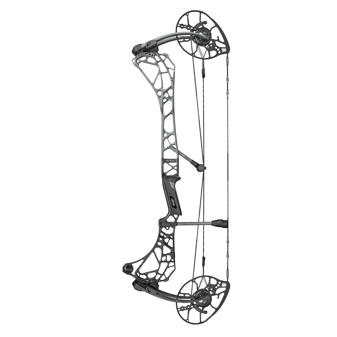
MATHEWS® ARC™
| FEES | |
| Elk Regular License | $707.00 |
| Elk Special License | $1,965.00 |
| Elk Youth License | $290.00 |
| Elk Cow/Calf License | $303.00 |
| Elk Cow/Calf Youth License | $115.00 |
| Elk Preference Point | $52.00 |
| Elk Youth Preference Point | $10.00 |
| Deer Regular License | $389.00 |
| Deer Special License | $1,215.00 |
| Deer Youth License | $125.00 |
| Deer Preference Point | $41.00 |
| Deer Youth Preference Point | $10.00 |
| Deer Doe/Fawn License | $49.00 |
| Deer Doe/Fawn Youth License | $34.00 |
| Antelope Regular License | $341.00 |
| Antelope Special License | $1,215.00 |
| Antelope Youth License | $125.00 |
| Antelope Doe/Fawn License | $49.00 |
| Antelope Doe/Fawn Youth License | $34.00 |
| Antelope Preference Point | $31.00 |
| Antelope Youth Preference Point | $10.00 |
| Black Bear License | $373.00 |
| Gray Wolf License | $187.00 |
| Mountain Lion Full Price | $373.00 |
| Mountain Lion Reduced Price | $92.00 |
| Turkey | $74.00 |
| Moose Regular License | $2,767.00 |
| Moose Preference Point | $150.00 |
| Bighorn Sheep Regular License | $3,017.00 |
| Bighorn Sheep Ewe/Lamb License | $255.00 |
| Bighorn Sheep Ewe/Lamb Youth License | $115.00 |
| Bighorn Sheep Preference Point | $150.00 |
| Mountain Goat Regular License | $2,767.00 |
| Bison Bull Regular License | $6,017.00 |
| Bison Cow/Calf Regular License | $2,767.00 |
| Conservation Stamp | $21.50 |
| Elk Special Management Permit | $15.50 |
| Archery Permit, Adult | $72.00 |
| Archery Permit, Youth | $12.00 |
| $15.00 Non-Refundable Application Fee Included in Prices. 2.5% Card Processing Fee Not Included in Prices. Preference Point Purchase is Optional. |
|
| FEES | |
| Elk Regular License | $62.00 |
| Elk Youth License | $30.00 |
| Elk Cow/Calf License | $48.00 |
| Elk Cow/Calf Youth License | $25.00 |
| Deer Regular License | $47.00 |
| Deer Youth License | $19.00 |
| Deer Doe/Fawn License | $27.00 |
| Deer Doe/Fawn Youth License | $19.00 |
| Antelope Regular License | $42.00 |
| Antelope Youth License | $20.00 |
| Antelope Doe/Fawn License | $27.00 |
| Antelope Doe/Fawn Youth License | $19.00 |
| Black Bear License | $47.00 |
| Gray Wolf License | $21.00 |
| Mountain Lion Full Price | $32.00 |
| Mountain Lion Reduced Price | $20.00 |
| Turkey | $74.00 |
| Moose Regular License | $157.00 |
| Moose Preference Point | $7.00 |
| Bighorn Sheep Regular License | $157.00 |
| Bighorn Sheep Ewe/Lamb License | $41.00 |
| Bighorn Sheep Ewe/Lamb Youth License | $25.00 |
| Bighorn Sheep Preference Point | $7.00 |
| Mountain Goat Regular License | $157.00 |
| Bison Bull Regular License | $419.00 |
| Bison Cow/Calf Regular License | $265.00 |
| Conservation Stamp | $21.50 |
| Elk Special Management Permit | $15.50 |
| Archery Permit, Adult | $16.00 |
| Archery Permit, Youth | $6.00 |
| $5.00 Non-Refundable Application Fee Included in Prices. 2.5% Card Processing Fee Not Included in Prices. Preference Point Purchase is Optional. |
|
| WYOMING ELK SEASON DATES | |
| Archery | Sep 1 – Sep 30, 2025 (varies by unit) |
| Rifle | Oct – Nov, 2025 (varies by unit) |
| WYOMING DEER SEASON DATES | |
| Archery (mule & whitetail) | Sep 1 – Sep 30, 2025 |
| Rifle (mule & whitetail) | Oct – Nov, 2025 (varies by unit) |
| Late Rifle (whitetail) | Nov – Dec, 2025 (varies by unit) |
| WYOMING ANTELOPE (PRONGHORN) SEASON DATES | |
| Archery | Aug 15 – Sep 30, 2025 |
| Rifle | Sept – Oct 31, 2025 (varies by unit) |
| WYOMING BIGHORN SHEEP SEASON DATES | |
| Archery | Aug 1 – Aug 31, 2025 (varies by unit) |
| Any Legal Weapon | Aug – Oct 31, 2025 (varies by unit) |
| WYOMING SHIRAS MOOSE SEASON DATES | |
| Archery | Sep 1 – Sep 30, 2025 (varies by unit) |
| Any Legal Weapon | Sep – Nov, 2025 (varies by unit) |
| WYOMING MOUNTAIN GOAT SEASON DATES | |
| Any Legal Weapon | Sep 1 – Oct 31, 2025 |
| WYOMING GRAY WOLF SEASON DATES | |
| Trophy Game Management Area | Sep 15, 2025 – Mar 31, 2026 |
| Predatory Animal Area (outside TGMA) | Year-round (2025–2026), where legal |
| WYOMING BLACK BEAR SEASON DATES | |
| Spring (by area/quota) | Apr – Jun, 2025 (varies) |
| Fall (by area/quota) | Sep – Nov, 2025 (varies) |
| WYOMING BISON SEASON DATES | |
| Any Legal Weapon (Jackson/Teton areas, draw/CWT) | Nov 2025 – Jan 2026 (by area/permit) |
| WYOMING MOUNTAIN LION SEASON DATES | |
| General (harvest-limit by area) | Sep 1, 2025 – Mar 31, 2026 (some areas to Apr/May) |
Disclaimer: Wyoming seasons vary by hunt area, license type, and quota. Some seasons open or close by emergency order when quotas are reached (bear, wolf, lion). Always verify current dates and rules with the Wyoming Game & Fish Department before planning.
| YEAR | NON-RESIDENT ELK | MOOSE, SHEEP, GOAT & BISON | DEER, ANTELOPE & RESIDENT ELK | LEFTOVER DRAW |
|---|---|---|---|---|
| 2025 | May 22, 8 a.m. (MDT) | May 8, 5 a.m. (MDT) | June 19, 4 a.m. (MDT) | July 9 |
| 2024 | May 16, 5 a.m. (MDT) | May 9, 5 a.m. (MDT) | June 13, 4 a.m. (MDT) | Early July |
| 2023 | May 16, 5 a.m. (MDT) | May 4, 5 a.m. (MDT) | June 15, 5 a.m. (MDT) | July 6 |
| 2022 | May 19, 5 a.m. (MDT) | May 3, 5 a.m. (MDT) | June 14, 5 a.m. (MDT) | |
| 2021 | May 20, 10 a.m. (MDT) | May 3, 10 a.m. (MDT) | June 17, 8 a.m. (MDT) | |
| 2020 | May 21, 10 a.m. (MDT) | May 5, 10 a.m. (MDT) | June 18, 10 a.m. (MDT) | |
| 2019 | February 21 | May 9 | June 20 | |
| 2018 | February 22 | May 10 | June 21 |
Create a FREE ACCOUNT to Unlock
The 2026 Tennessee elk quota hunt application is open from February 4 to February 25 at 11:59 pm CST. Instructions on how to apply for the 2026 elk drawing can be found at https://www.tn.gov/twra/hunting/quotahunts/elk-draw.html. Successful draw applicants will be notified by email and a phone call from the Tennessee Wildlife Resources Agency (TWRA) in early March.
Tennessee accepts elk applications online at https://gooutdoorstennessee.com or the TWRA On the Go APP, at a TWRA Licensed Agent, or at a regional office. Applications cannot be accepted by mail. Tennessee does not accept party applications for elk.


Nineteen elk quota permits will be issued for the 2026 Tennessee elk hunt. Nine will be issued for the archery-only season, another nine will be issued for the any weapon season, and one additional permit will be issued for the youth any weapon season. One of the any weapon permits will be given to a wildlife organization to be raffled. No more than 25% of successful applicants can be non-residents. No license is required to apply and there is no fee for the elk permit if drawn.
Applicants may select up to four hunt choices on their application. All four choices are considered before moving on to the next applicant. You may mix weapon choices among the four choices. Each permit holder will be allocated the Elk Hunt Zone (EHZ) and weapon choice they were successful in drawing.
Once your application is complete, you may review your application by logging into your GoOutdoorsTennessee account. Applications may be edited until the deadline. If successfully drawn for an elk permit, applicants cannot submit an application for ten years.
$199 BILLED ANNUALLY
Everything in Pro, plus unlimited one-on-one hunt consultations, and everything you need to prep like a pro and hunt like a fool.
$48 BILLED ANNUALLY
Access community intel, research tools, and our online magazine. Draw more tags and go on more hunts with better information.
Our members experience improved hunting opportunities as a direct result of the Huntin' Fool magazine. We are the only publication that breaks more than 20 states' hunting regulations and draw systems into bite-sized chunks for our members.
There is no application fee for Annual Sportsman, Lifetime Sportsman, or Annual Senior Citizen license holders. For all other applicants, there is a non-refundable $12 application fee and a $1 agent fee. There is a $2 processing fee if the application is made on the internet. All application fees must be paid with a Visa, MasterCard or Discover card.


The elk permit is not transferable to another individual.
All hunters born on or after January 1, 1969 must possess proof that they have successfully completed a hunter education course. Hunter education certification accepted from any state.
Hunters must wear on the upper portion of their body and head a minimum of 500 square inches of daylight fluorescent orange or pink (visible front and back) while hunting big game, except on archery-only and turkey hunts. A hat and vest fulfill the requirements. Blaze orange/pink camo is legal if it contains 500 square inches of fluorescent orange or pink.
In 2025, there were a total of 1,627 applicants (gun and archery) and another 532 youth applicants (resident only).
Advisor Articles from Our Magazine on Application and Hunting Strategy
In 2025, there were a total of 1,627 applicants (gun and archery) and another 532 youth applicants (resident only).
Non-resident youth applicants must be at least 16 years old to apply. One youth-only elk quota permit will be offered in the draw for resident applicants ages thirteen to sixteen years old. If drawn for this permit, the youth hunter is permitted to hunt all open elk zones. Youth may not apply for both the youth elk quota hunt and elk quota hunt. Only one application may be submitted for any elk hunt.
Arrows for archery equipment (longbows, recurves, compounds, and crossbows) must be equipped with sharpened broadheads. Muzzleloading firearms are defined as those firearms in which a projectile (rifle) or projectiles (shotgun) must be loaded from the muzzle (front) end of the barrel due to design and manufacturing that prevent the projectile(s) from being loaded from the breech (rear) end. Muzzleloading firearms must be .36 caliber or larger. Rifles and handguns must use centerfire ammunition; full metal jacket ammunition is prohibited.
Of the nineteen elk permits in 2026, one will be issued to a qualifying non-profit wildlife conservation organization, and all proceeds benefiting the TWRA. Elk Management Program. The person drawn for the non-profit conservation organization will be October 3–9, 2026 in EHZ 1 and private land counties opened by the TWRA. The permit will be available through an online raffle. To purchase tickets for the raffle, visit the Tennessee Wildlife Resources Foundation website at www.twrf.net. In 2025 the deadline to purchase tickets was September 14, and the winner was announced September 18. Raffle tickets are $20 each, three for $50, or ten for $100, and there is no limit on the number of tickets you may buy. The 2026 raffle winner will hunt during the 2027 season.
Elk are native to Tennessee and were present until the mid-1800s. This is why the Tennessee elk program is considered a restoration, not an introduction. In December 2000, fifty elk were relocated from Elk Island National Park in Alberta into the Cumberland Mountains in northeastern Tennessee. Over the following eight years, the TWRA conducted four additional release efforts, bringing the population up to around 200 elk. The current elk population is now estimated at over 400 animals. In 2009, the state’s inaugural elk hunt was held, and five quota tags were issued and filled.
The Cumberland Mountains are made up of steep slopes and hardwood forest. Much of this country consists of thick understory with reclaimed strip mines scattered throughout. The state manages food plots throughout the mountains to pull the elk out of the thicker cover to feed, and focusing on these areas on a hunt is your best chance to turn up a bull. Being elk in Tennessee should mostly be viewed as an opportunity to hunt elk. Most hunters will take the first decent bull they get a chance at. While a 300” bull is a tough mark to break, there is always a chance to turn up a much better bull. There are pockets in most zones that are too thick, steep, and roadless to receive any hunting pressure, allowing for a handful of bulls to stay hidden and grow old. The rut coincides best with the archery dates, and this is when most bugling activity can be expected. The later rifle dates can be more hit-or-miss, with rut activity depending on the year’s weather.
When considering which zones to apply for, there isn’t much of a difference between zones as far as the quality of hunting goes. Zone 1 has the edge on most consistent success rates, while zones 7, 8 and 10 may give you a slightly better edge at a top-end bull. Zones 2 and 4 are great choices as well. Success rates typically average around 65% to 70% each year. Despite the draw odds of roughly one in 750, the elk hunt is cheap to apply for. For many, the chance at a great elk hunt in the mountains of Tennessee will be worth the $12 investment. If you have any questions about hunting elk in the Cumberland Mountain hardwoods, give us a call!
Create a FREE ACCOUNT to unlock content
Upon harvesting an elk, the hunter must immediately attach the elk harvest tag provided by TWRA to the carcass. All harvested elk quota permit holders must be checked in at the North Cumberland WMA office on the day of harvest. Harvest report information for the 2025 season will be updated before the 2026 application period begins and can be found at https://www.tn.gov/content/tn/twra/hunting/big-game.html.
Tennessee’s elk hunting takes place within zones 1, 2&6, 3, 4, 5, 7, 8, 9 and 10. Each zone will offer one antlered, archery hunt and—aside from zone 1—one antlered any weapon hunt in the elk quota draw. Zones 2 and 6 are hunted on the same permit and there will be one hunter offered under the archery and gun categories for these two zones together. The any weapon hunt in zone 1 is issued through a raffle. See other tag opportunities for more information.
Over 90% of harvested bulls are taken on public land on the North Cumberland WMA. If hunting private property, it is the responsibility of the elk permit holder to obtain verbal or written permission to hunt.
Huntin’ Fool offers a wide variety of services and resources within the hunting space, and the Huntin’ Fool App offers access to them all. Utilizing this app, you will be able to apply for hunts, plan hunts, buy hunts, and win hunts. This app is simple to use and puts the tools you need to go on great hunts right at your fingertips.
At Huntin' Fool, we are always looking for ways to improve our service and help out members to the very best of our abilities. We believe communication is what makes our Huntin' Fool community great!
Deer hunting in Tennessee opens on different dates depending on the weapon type and age of the hunter. For the 2025–2026 season, the Archery-Only August Hunt begins on August 22, 2025 (the fourth Friday in August) and is limited to private lands and select Unit 1 WMAs. The General Archery Season opens on September 27, 2025, followed by the Muzzleloader/Archery Season on November 8, 2025, and the Gun/Muzzleloader/Archery Season on November 22, 2025. There are also Young Sportsman Hunts for ages 6–16, with the first opening on October 25, 2025, and a second on January 10, 2026. Additionally, Free Hunting Day is scheduled for August 23, 2025. Some Wildlife Management Areas (WMAs) and refuges have different opening dates, such as Bogota WMA (October 4) and Laurel Hill WMA (September 20), so hunters should always check local regulations.
Deer hunting in Tennessee concludes on different dates depending on the method of take, age of the hunter, and location. For the 2025–2026 season, the Statewide General Season for gun, muzzleloader, and archery ends on January 4, 2026, while the final Young Sportsman Hunt for ages 6–16 takes place the following weekend, January 10–11, 2026. The Archery-Only Segment ends November 7, 2025, and the Muzzleloader/Archery Segment ends November 21, 2025, before the gun season begins. On certain Wildlife Management Areas and Refuges, deer season ends earlier—for example, Eagle Lake Refuge ends November 14, and Bridgestone/Firestone Centennial Wilderness and several other WMAs close by December 13. Hunters should always verify WMA-specific regulations and must check in harvested deer by midnight on the day of harvest. Special rules apply in the CWD Management Zone, including carcass transport and feeding restrictions through the end of the season.
Yes, elk hunting is allowed in Tennessee through a limited and highly regulated quota system. For the 2026 season, the state will issue 19 elk quota permits, with one reserved for a resident Young Sportsman and another raffled by a conservation group. Elk may be hunted only in designated Elk Hunt Zones (EHZs) within the North Cumberland WMA or on private lands in Anderson, Campbell, Claiborne, Morgan, and Scott counties (with landowner permission). Season dates are Sept. 26–Oct. 2 (Archery), Oct. 3–9 (Gun/Muzzleloader/Archery), and Oct. 10–16 (Young Sportsman). The bag limit is one antlered elk per permit, and all harvested elk must be physically checked in. Additionally, a legal deer hunter may take one elk per year as an incidental harvest outside of the designated elk counties and specific federal lands, provided it is reported the same day. Elk hunters must hold the appropriate Hunting and Fishing Combination license and a Big Game license for their weapon type, though Sportsman and Lifetime License holders are exempt from the supplemental fee.
Tennessee's juvenile hunts, known as Young Sportsman Hunts, are scheduled on specific weekends throughout the hunting season and are open to youth ages 6 to 16. For the 2025–2026 deer season, the primary statewide youth hunts are set for October 25–26, 2025 (the last weekend in October) and January 10–11, 2026 (the weekend after the general gun season ends). For turkey, the spring youth weekend is April 4–5, 2026, while fall turkey dates vary by unit. Youth elk hunters (ages 13–16) drawn for a quota tag can hunt October 10–16, 2026. Additional opportunities include a youth waterfowl hunt on February 7 and 14, 2026, and a youth squirrel hunt on August 16, 2025. Youth hunters must be supervised by a non-hunting adult age 21+, wear appropriate safety clothing, and meet age-specific license or hunter education requirements. Dates and rules may vary on Wildlife Management Areas.
The cost of a Tennessee Lifetime Sportsman License depends on the applicant's age at the time of purchase. As of the most recent schedule, prices are: $320 for infants under age 3, $659 for children ages 3–6, $988 for youth ages 7–12, $1,976 for adults ages 13–50, $1,153 for adults ages 51–64, and $329 for seniors 65 and older. Adopted children under age 13 also qualify for the $320 rate. This all-inclusive license covers all hunting, trapping, and sport fishing privileges for life without requiring additional supplemental licenses or permits, and it allows the holder to apply for quota hunts at no extra cost. Applications must be submitted via email, mail, or in person at a TWRA regional office.
To hunt deer in Tennessee, residents ages 16–64 must have a Combo Hunt/Fish (Type 001) license plus a supplemental Big Game license for each method used—Big Game Gun (Type 009), Archery (Type 010), or Muzzleloader (Type 011). Alternatively, the Annual Sportsman License (Type 004) covers all of these. Junior residents (ages 13–15) only need a Junior Hunt/Fish/Trap (Type 002) license, while seniors (65+) can choose from discounted or lifetime options, including the Senior Sportsman License (Type 167). Nonresidents must purchase an "All Game" license—either the Annual (Type 073) for $305, 7-Day (Type 074) for $214, or Junior versions for $26–$41 depending on duration. Additional permits may be required for hunting on Wildlife Management Areas or participating in quota hunts. Hunter education certification is required for anyone born after January 1, 1969, unless using an Apprentice Permit. Exemptions apply for children under 13 and resident landowners hunting their own farmland. Licenses can be purchased at GoOutdoorsTennessee.com.
Yes — you can hunt on Sundays in Tennessee, but whether you should depends on the species and the specific land you’re hunting. Statewide general seasons (including deer, turkey, and many small game seasons on private land) do include Sundays, and some youth and migratory bird hunts explicitly run Friday through Sunday. However, individual Wildlife Management Areas (WMAs) and refuges often have their own day‑of‑week restrictions — for example, some units restrict deer or turkey archery to certain weekdays and exclude Sunday altogether, while others allow Sunday waterfowl or small game hunting. Because these local rules vary by WMA or refuge, you should always check the specific regulations for the area where you plan to hunt before assuming Sunday is open.
Yes, Tennessee requires all hunters born on or after January 1, 1969, to complete a hunter education course and carry proof of certification. The state accepts valid certifications from all other states. Youths under age 10 are exempt but must be accompanied by an adult age 21 or older who can take immediate control of the hunting device. Resident landowners and their children hunting on their own farmland are also exempt. For those aged 10 and older who haven’t completed a course, an $11 Apprentice Hunter Education Permit is available as a one-year exemption and may be used up to three times. Permanent certification can be obtained through online or in-person courses offered by the TWRA.
| Antelope | Regular seasons typically run from mid-August to late November, with special archery seasons starting around mid-August. |
| Deer | General seasons are usually from early September to late November, with special archery seasons opening in early September. |
| Elk | Regular seasons span early September to late November, with special archery seasons beginning in early September. |
| Moose | Seasons generally run from September through October, with special archery seasons starting September 1. |
| Bighorn Sheep | Regular seasons are from September 1 to October 31, with special archery seasons from August 15 to August 31. |
| Mountain Goat | Regular seasons run from September 1 to October 31, with special archery seasons from August 15 to August 31. |
In Tennessee, hunters can pursue a wide range of species categorized as big game, small game, furbearers, and migratory birds. Big game includes white-tailed deer, wild turkey, black bear, and elk (via quota hunts). Small game options include squirrel, rabbit, quail, grouse, and woodcock, along with furbearers such as coyote, bobcat, fox, raccoon, and opossum. Migratory bird species like ducks, geese, doves, and sandhill cranes are also legal to hunt with the appropriate permits. Wild hogs may be hunted year-round on private land, and bullfrogs and common snapping turtles can be harvested under specific regulations. Protected species—including alligators, cougars, songbirds, and any threatened or endangered species—are strictly off-limits.